


دەروازەی بایۆمەتری خولاوە: ڕێنماییەکی کرداری هەڵبژاردن و یەکخستن
2026-07-16


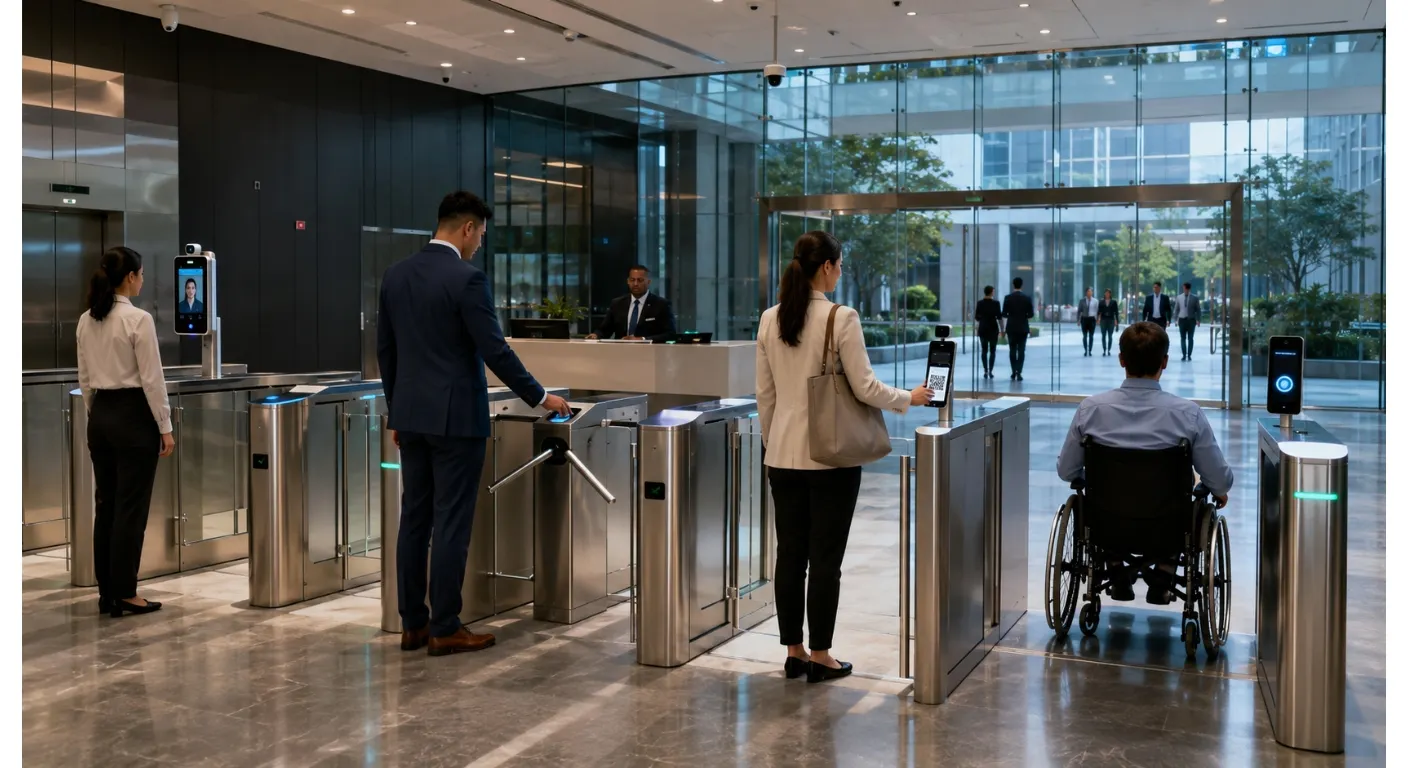
A biometric turnstile gate combines identity verification with physical pedestrian control. Instead of granting access only because a person carries a valid card or enters a PIN, the system can verify a fingerprint, دەم و چاو, ئایریس, لەپی دەست, or another registered biometric characteristic before opening the lane.
هەرچۆنێک بێت, adding a biometric terminal to a turnstile does not automatically create a secure or efficient entrance. Recognition accuracy, کوالیتی تۆمارکردن, verification speed, spoofing resistance, تایبەتمەندی داتا, lane sensors, یەکخستنی نەرمەواڵە, and fallback procedures must all work together.
This guide helps security integrators, project contractors, بەڕێوبەرانی ئاسانکاری, ڕاوێژکارەکان, and procurement teams specify a biometric entrance that performs reliably under real operating conditions.
Understand the Complete Biometric Access Process
A biometric turnstile is part of a wider identity and access-control system. A typical process includes:
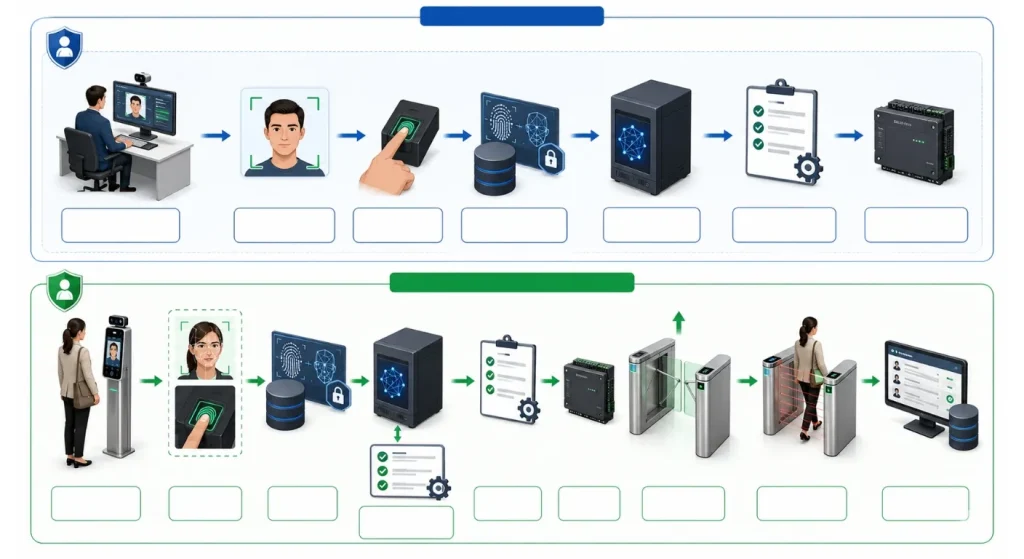
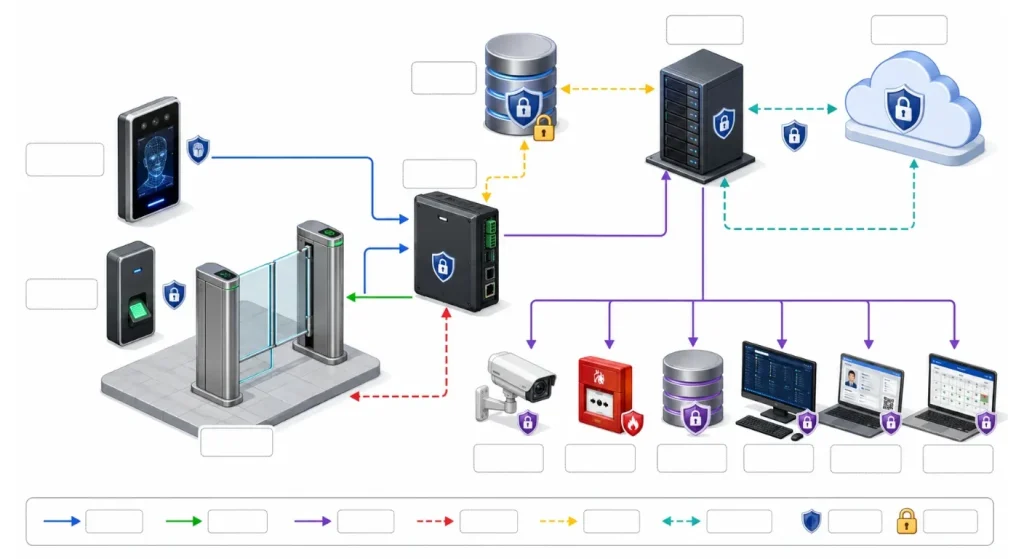
Enrollment → Biometric capture → Template comparison → Access decision → Gate opening → Passage detection → Event record
During enrollment, the system captures a user’s biometric sample and creates a digital template. At the entrance, a new sample is compared with the registered template or database. The access platform then checks permissions before sending an opening signal to the gate.
Buyers can review Ironman’s biometric turnstile systems و سوڕانەوەی دەموچاو options when planning the hardware configuration.
The biometric terminal confirms identity, while the turnstile controls physical passage. Both functions must be tested together.
Choose the Right Biometric Method
Different biometric technologies suit different users and operating environments.
| Biometric Method | سوودی سەرەکی | Important Limitation | کاربەرنامەی ئاسایی |
|---|---|---|---|
| ناسینەوەی دەموچاو | Contactless and convenient | Sensitive to lighting, camera angle, and image quality | فەرمانگەکان, زانکۆکان, and visitor entrances |
| ناسینەوەی پەنجەمۆر | Compact and widely used | تەڕ, پیس, داپۆشراو, or gloved fingers can affect capture | کارگەکان, دەروازەی ستافەکە, and restricted rooms |
| Iris recognition | Strong identity differentiation | Requires suitable capture distance and user positioning | High-security facilities |
| Palm or vein recognition | Contactless or low-contact operation | Higher terminal cost and specialized integration | Healthcare and controlled environments |
| Multimodal recognition | Uses more than one identity factor | More complex enrollment and system management | High-security projects |

The correct choice depends on security level, user population, هەلومەرجی ژینگەیی, ڕێڕەو, پاکوخاوێنی, enrollment resources, and privacy requirements.
A factory where workers wear gloves may not be suitable for fingerprint-only access. A facial recognition terminal positioned against strong backlighting may also produce slower or less consistent results. Select the biometric method around the operating environment instead of choosing the most impressive specification.
Distinguish Verification From Identification
Biometric systems can operate in two main ways.
One-to-one verification compares the captured sample with the template linked to a claimed identity. The user may first present an employee number, کارت, بڕواپێدانی مۆبایل, یان QR code.
One-to-many identification searches a database to determine who the user is without requiring another credential.
One-to-many identification may offer a more seamless entrance, but database size, matching thresholds, network design, and privacy risks become more important. One-to-one verification can reduce the search scope and may be suitable when a second credential is already part of the workflow.
The buyer should ask the biometric provider to state which method is used, where comparison occurs, how many identities are stored, and whether processing takes place locally or on a remote server.
Evaluate Accuracy Under Project Conditions
Claims such as “99.9% accuracy” are incomplete without a test method, بەربەست, user population, and operating environment.
Ask for information about:
- False match rate
- False non-match rate
- Recognition threshold
- ڕێژەی سەرنەکەوتنی تۆمارکردن
- Average and maximum verification time
- Database size during testing
- Lighting and camera conditions
- Fingerprint quality and sensor condition
- Performance across expected user groups
A false match can grant access to the wrong person. A false non-match rejects an authorized user and may create queues or require manual intervention. Changing the matching threshold can alter the balance between these two outcomes.
NIST conducts independent evaluations of face-recognition algorithms and reports performance under defined datasets and test conditions. Buyers should treat laboratory results as useful evidence, but still test the actual terminal, camera position, user population, و ژینگەی چوونە ژوورەوە.
Avoid calculating pedestrian throughput from the gate-opening speed alone. Total processing time includes user positioning, biometric capture, template comparison, access-rule checking, gate response, and physical passage.
Require Presentation Attack Detection
Biometric credentials are difficult to forget, but they can still be targeted with presentation attacks. Depending on the biometric method, an attacker may attempt to use a printed face, replayed video, artificial fingerprint, mask, or another imitation.
Ask whether the terminal includes presentation attack detection or liveness detection and what attack types were evaluated. ISO/IEC 30107 provides a framework for describing and testing biometric presentation attack detection, but reference to the standard should not be treated as proof that every spoofing method will be detected.
The project team should clarify:
- Whether liveness detection is enabled
- Which attack instruments were tested
- Whether detection operates locally or through a server
- How suspicious attempts are recorded
- Whether repeated failures trigger an alarm
- How software updates affect detection performance
A marketing phrase such as “anti-spoofing” is not enough without test scope and evidence.
Plan Biometric Data Privacy Before Enrollment
Biometric information requires more careful governance than an ordinary access card number. A lost card can be replaced, while a person cannot replace a face or fingerprint in the same way.
پێش بڵاوکردنەوە, پێناسەکردن:
- The lawful purpose for collecting biometric data
- Whether biometric use is necessary and proportionate
- What data or templates are stored
- Where information is processed and retained
- Who can access or export records
- How long data is retained
- How templates are deleted when users leave
- Whether users receive a clear privacy notice
- Whether a non-biometric alternative is available
The UK Information Commissioner’s Office provides guidance on lawful, fair, ورد, and transparent biometric processing. Local requirements differ, so the system owner should complete the necessary legal and privacy review for the project country.
The turnstile manufacturer should not automatically be assumed to control the biometric database. Responsibilities among the facility operator, biometric vendor, access-control provider, پلاتفۆرمی هەور, and integrator should be documented.
Match the Turnstile Type to the Physical Security Requirement
The biometric terminal determines whether access should be authorized. The turnstile determines how physical passage is controlled.
| جۆری سوڕانەوە | Biometric Application | Main Consideration |
|---|---|---|
| سووڕانەوەی سێ پایه | Employee attendance and compact entrances | Narrow passage and mechanical arm movement |
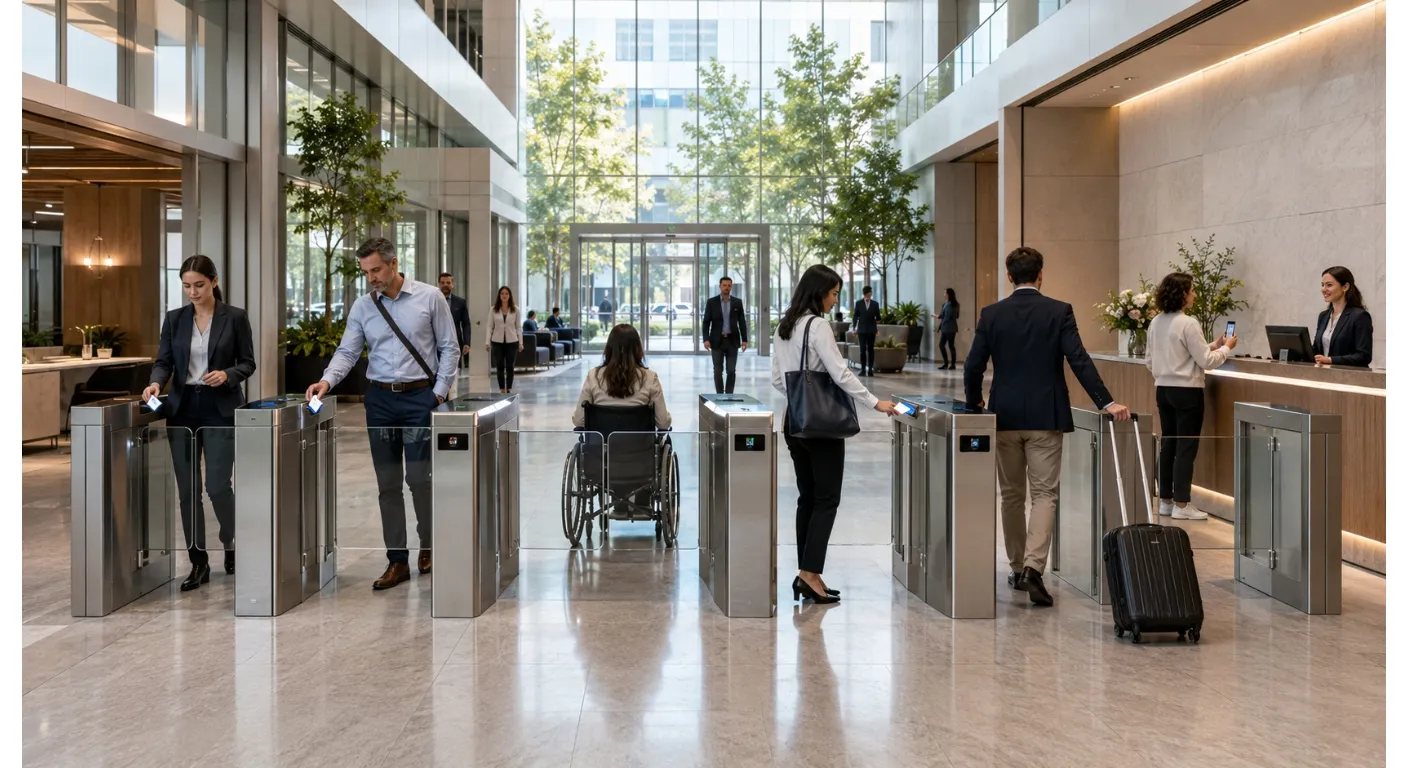
| دەروازەی بەربەستی جۆلانە | فەرمانگەکان, نەخۆشخانەکان, and accessible lanes | Wide passage and sensor safety |
| دەروازەی بەربەستی فلاپ | Commercial buildings and transit areas | ڕێڕەوی خێرای ئۆتۆماتیکی |
| دەروازەی خێرایی | Premium corporate and high-traffic entrances | Advanced sensing and tailgating detection |
| قۆڵی خولاوە بە درێژی تەواو | Restricted outdoor and perimeter areas | Strong physical separation |
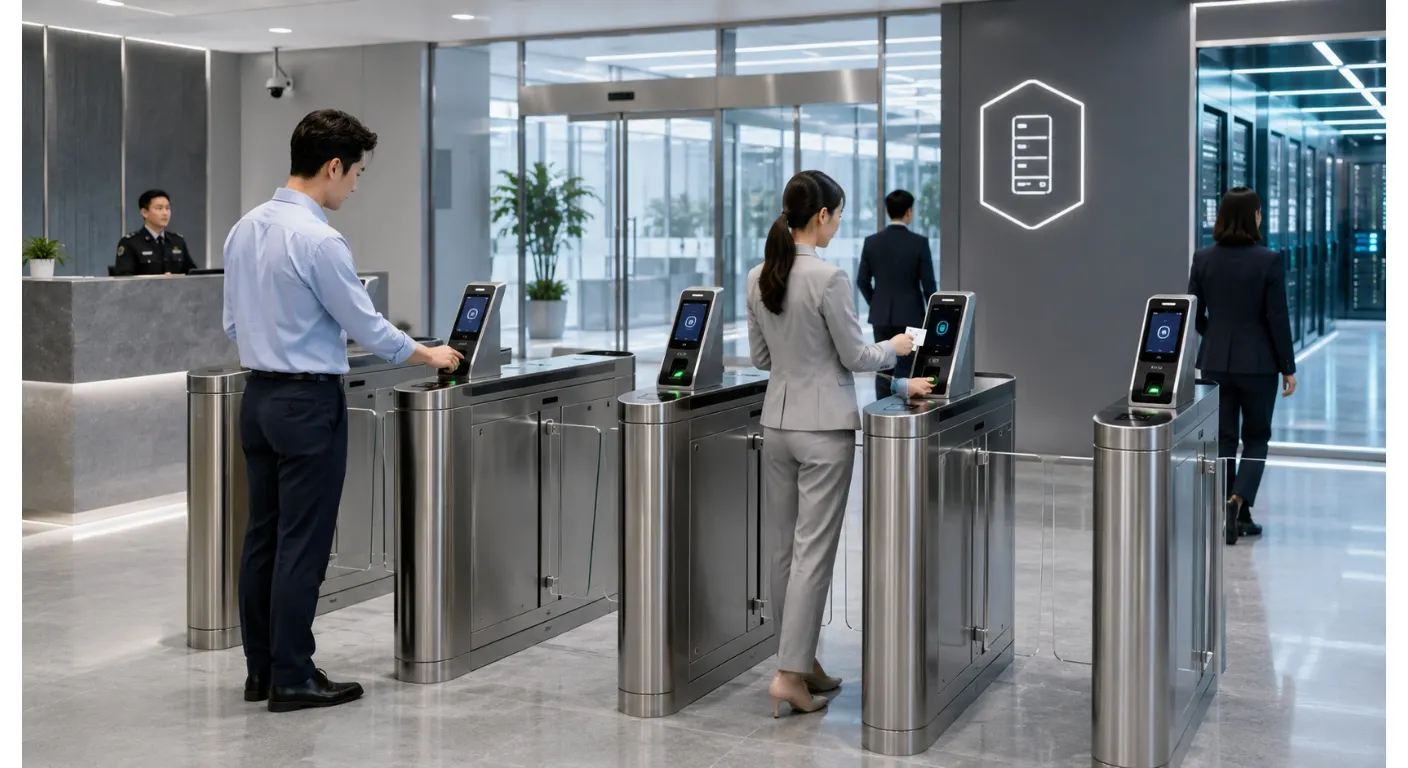
A fingerprint reader may work with a compact سوڕانەوەی سێ پایه, while facial recognition is often paired with a دەروازەی بەربەستی جۆلانە یان دەروازەی خێرایی. High-security perimeter projects may evaluate a گۆشەی سووڕانەوەی-بەرزی تەواو.
Select the lane according to physical security, پانتایی بڕگە, مەترسی دواوەی ڕێگا, ئاسوودەیی بەکارهێنەر, توانای گەیشتن, and emergency behavior—not only the biometric terminal.
Define System Integration Responsibilities
پێش به رهه مهێنان, confirm how the biometric terminal communicates with the access controller and turnstile.
Important items include:
- Reader and terminal model
- Mounting height and viewing angle
- گواستنەوە, ویگاند, RS-485, TCP/IP, or API interfaces
- Local or cloud-based template storage
- Access-rule and schedule management
- Attendance or visitor-system integration
- Alarm and CCTV linkage
- Offline operation
- Fire-alarm and emergency inputs
- Event synchronization after network recovery
پیاوی ئاسنین access-control equipment can be reviewed when selecting controllers and credential devices. The supplier, biometric provider, software provider, and integrator should establish a responsibility matrix before commissioning.
Do not wait until installation to discover that the terminal cannot fit the cabinet, the opening signal is incompatible, or the system cannot operate during a network interruption.
Provide an Alternative Access Method
A biometric system will occasionally reject an authorized user or fail to capture a usable sample. The project therefore needs a controlled fallback process.
Possible alternatives include:
- RFID card or mobile credential
- QR visitor pass
- Reception verification
- Security-staff release
- PIN combined with another credential
- Dedicated manual or accessible gate
The fallback method should not bypass all security controls. It should record who approved access, why the biometric method failed, and which entrance was used.
Alternative access is especially important for visitors, کرێکارە کاتییەکان, injured users, people wearing protective equipment, and individuals who cannot reliably use the selected biometric method.
Test the Complete Entrance Before Shipment
Factory acceptance testing should use the approved biometric terminal, بنکەی دراوە, کۆنتڕۆڵکەر, دەروازە, barrier length, sensor settings, and access rules.
تاقیکردنەوە پێشنیارکراوەکان بریتین لە:
- Successful and failed enrollment
- Valid and invalid biometric samples
- False rejection handling
- هەوڵە سەرنەکەوتووە دووبارەبووەکان
- Liveness or presentation-attack scenarios
- دەروازە, دەرچوون, and bidirectional passage
- Tailgating and wrong-direction movement
- Network and server interruption
- Offline verification
- Emergency release
- Alternative credential use
- Event recording and synchronization

Use representative users and recreate expected lighting, protective equipment, پانی ڕێگا, and traffic conditions. Request videos, تۆمارەکانی تاقیکردنەوە, وەشانەکانی نەرمەواڵە, configuration files, and serial numbers before shipment.
پیاوی ئاسنین پشتگیری ڤیدیۆکان can also help installers understand gate setup and troubleshooting.
ئامادەکردنی RFQ ی تەواوی خولاوەی بایۆمەتری
دابینکردن:
- وڵاتی پڕۆژە و جێبەجێ کردن
- Required biometric method
- Number of enrolled users
- Verification or identification mode
- Expected peak pedestrian flow
- Turnstile type and lane quantity
- Accessible passage requirements
- Indoor or outdoor environment
- Existing access-control and software platforms
- Data-storage and privacy requirements
- Liveness-detection requirements
- Alternative credential method
- Emergency and offline logic
- تاقیکردنەوە, دۆکیۆمێنت, دامەزراندن, and delivery scope
Send the entrance plan, user workflow, biometric requirements, interface documents, and project schedule through the پەڕەی پەیوەندی پیاوی ئاسنین for technical evaluation.
دەرئەنجام
A biometric turnstile gate should be evaluated as an identity-assurance and pedestrian-control system, not simply as a turnstile with a scanner attached. Recognition accuracy, enrollment, دۆزینەوەی زیندوویی, تایبەتمەندی, یەکخستن, lane security, گەڕانەوە بۆ چوونە ژورەوە, and project testing all affect performance.
The most reliable solution uses documented thresholds, clear data responsibilities, approved interfaces, realistic testing, and a practical alternative for users who cannot complete biometric verification.
پرسیارە متداولەکان
What Is a Biometric Turnstile Gate?
It combines facial, پەنجەمۆر, ئایریس, لەپی دەست, or another biometric verification method with a physical pedestrian gate. The biometric system approves identity, while the turnstile controls passage.
Which Biometric Method Is Best for a Turnstile?
There is no universal best option. Choose according to security level, user population, هەلومەرجی ژینگەیی, ڕێڕەو, پاکوخاوێنی, تایبەتمەندی, and enrollment requirements.
Can Biometric Turnstiles Work Without Internet Access?
Some systems support local databases and offline verification, but this depends on the terminal and system architecture. Confirm how records are stored and synchronized after network recovery.
Are Biometric Turnstile Gates Completely Spoof-Proof?
No biometric system should be described as completely spoof-proof. Request presentation-attack testing, liveness-detection details, software-update policies, and evidence relevant to the expected attack risks.
What Happens When an Authorized User Is Not Recognized?
The entrance should provide a controlled alternative such as RFID, کۆدی QR, reception approval, or security release. Every fallback event should be recorded rather than allowing an undocumented bypass.
